 Phase transitions, such as the change of liquid water into ice, help elucidate the complex behavior of systems composed of many particles and occur in all areas of physics. Recently, theorists have predicted that a cavity containing only a single atom should transition from opaque to transparent when the input photon flux reaches a critical number. And just as water and ice can coexist at the melting point temperature, the cavity was predicted to be both opaque and transparent close to the critical point, stochastically switching between the two states. This coexistence is a hallmark for a so-called first-order phase transition, which has been observed for the first time in a dissipative quantum system.
The article in Physical Review X and the IST press release as well as some news coverage on DerStandard.

 The Vienna Doctoral Program on Complex Quantum Systems (CoQuS) is a training center for more than 40 students who are selected from an international pool of applicants, based on their academic excellence, scientific success and ambition.
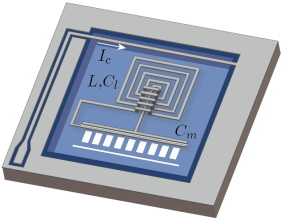 Preparation and detection of mechanical objects at the quantum zero-point level has been achieved in both the optical and microwave regimes. Here, the authors develop silicon nitride nanomembranes that are suitable for integrating nanophotonic, nanomechanical and superconducting microwave circuits together.
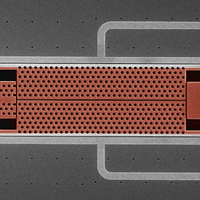 The coupling of electromagnetic fields to nanomechanical systems has ushered in the field of quantum optomechanics, in which vibrating objects can be studied and used at the level of their quantum zero-point motion. The authors fabricate a planar technology platform for integrating nanophotonic, nanomechanical, and superconducting microwave circuits. Joining these components could yield a quantum converter between the microwave and optical frequency domains, enabling long-range networks of superconducting qubits for quantum information processing.
 Linking classical microwave electrical circuits to the optical telecommunication band is at the core of modern communication. Future quantum information networks will require coherent microwave-to-optical conversion to link electronic quantum processors and memories via low-loss optical telecommunication networks. Efficient conversion can be achieved with electro-optical modulators operating at the single microwave photon level.
 Quantum IDs